Apr 3

Originally posted at www.nacion.com on 4/1/13

By Randall Arauz, President, PRETOMA

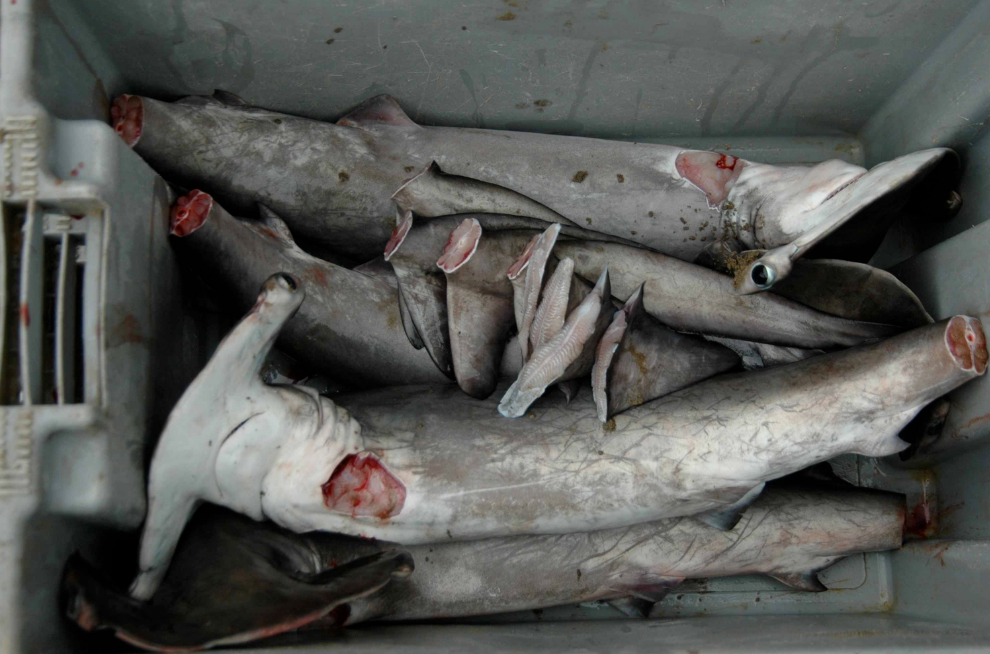
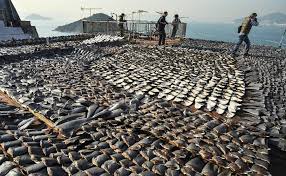
With the listing of hammerhead sharks in Appendix II of the Convention on International Trade in Endangered Species of Wild Fauna and Flora (CITES) during the sixteenth Conference of the Parties (CoP16) held from March 4th-14th in Bangkok,Thailand, the world expressed the urgent need to protect this species from the threat posed by the international trade of its products, particularly fins, which are highly prized to prepare shark fin soup in Asia.

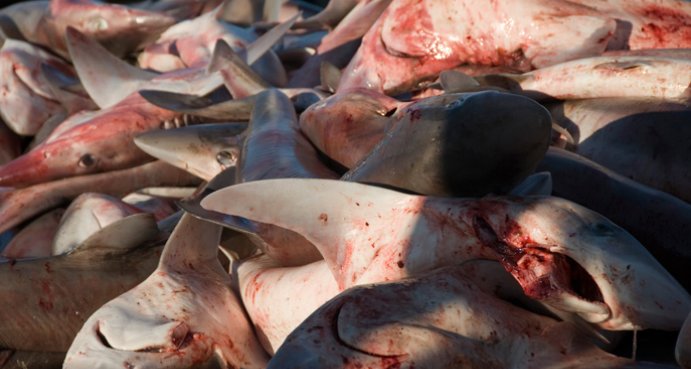
The latest scientific information available indicates that up to 100 million sharks are killed each year to meet the demand of the international market, which has led to a 90-95% demise of global hammerhead shark populations. The need for action is compelling.

Costa Rica, along with Honduras and Brazil, proposed the inclusion of hammerhead sharks in Appendix II of CITES, hoping to finally interrupt this unsustainable extraction of sharks, which has been denounced for decades but for which no effective measures have been taken in a regional, or even less, a global context.

It must be pointed out that the listing of hammerhead sharks in Appendix II does not mean that a total ban on the international trade of the species will be installed, but rather guarantees through the issuing of a “Non Detriment Finding” by the exporting country that the extraction of specimens from the wild population was done in a sustainable manner. Failure to do so translates into economic sanctions.

This of course, directly interferes with the current unsustainable extraction of sharks, something that the Asian block of nations, led by Japan and China, weren’t about to allow.

Lacking any technical arguments, they claimed before the delegates of the world that this measure would not only be too difficult to implement, but it would also have adverse effects on artisanal fisheries in developing countries. Nothing could be farther from the truth! Is Cites meant to work only when implementations measures are easy? In addition, artisanal fishers are not affected by Cites any way whatsoever, as they trade mainly juvenile sharks in domestic markets. In any case, if anything at all they benefitted by the measure, as it guarantees the sustainable exploitation of adults in the high seas.

Incredibly enough, one of the main hurdles to overcome in order to achieve this victory in Cites emanated internally, from the very own fisheries management departments of each Central American country, all of which echoed the same technically unsubstantiated claims by Japan and China to oppose the proposal. Thanks to the favorable opinion of the Central American Environment and Development Council (CCAD), the Central American countries were able to override their own fisheries authorities and thus consolidated a block in favor of the hammerhead shark, which was joined by South America, Mexico, Canada, USA, the European Union and a block of West African nations.

And thus, Japan and China failed in their attempt to derail the hammerhead proposal, which was supported by more than two thirds of the 177 CITES member countries, as well as their effort to call for a second vote during plenary meeting, which could have succeeded if they would have had the support of one third of the member countries. Their defeat was overwhelming. Hurrah for Hammerhead Sharks!

I believe that if Japan and China learned anything at all, its that in Latin America we aren’t going to take the overfishing and depletion of sharks anymore.

I just hope that the fisheries authorities of the region, that have been dedicated for decades to defend the interest of foreign fleets over the public interest, learned this lesson as well.

Mar 20
fin_donelly_mp_270x224

MP Fin Donnelly (left), joined here by HSI’s campaign manager Gabriel Wildgen, introduced Bill C-380 to ban the importation of shark fins to Canada. HSI

Originally posted at www.hsi.org on 3/20/13

Humane Society International/Canada Renews Calls for Parliament to Support Shark Fin Import Ban

Humane Society International/Canada is renewing calls for Members of Parliament to support Bill C-380 to ban the import of shark fins into Canada in response to a new Environics poll, which revealed 81 percent of Canadians support such a ban. Parliament is preparing to hold a vote on the Bill on March 27.

Gabriel Wildgen, campaigner for HSI/Canada stated, “Shark finning is horribly cruel and poses an urgent threat to our ocean ecosystems. It’s not surprising that most Canadians want our country to take a stand against shark finning rather than contribute to the industry. Members of Parliament must listen to their constituents and pass the shark fin import ban before it is too late.”

Member of Parliament Fin Donnelly, who introduced the Private Member’s Bill commented, “The global shark fin trade is responsible for killing millions of sharks each year. Canadians do not support the illegal trade of shark fins and want the federal government to take action by banning the importation of shark fins to Canada. I hope Parliamentarians will present their constituents’ views by voting in favour of my bill.”

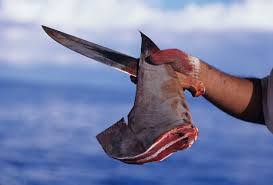
Shark finning is the practice of cutting fins off of sharks and discarding the animals in the ocean. The finned sharks often die slowly from suffocation, bleeding, and predation from other species. Tens of millions of sharks are killed each year to feed the global demand for shark fin soup.

Many shark species are apex predators, meaning that they help to regulate all other species under them in the ocean food chains. As shark populations decline, the entire ocean ecosystem is thrown out of balance. Several shark species have plummeted by over 90 percent in recent decades.

In 2012, Canada imported more than 106,000 kg of shark fins. HSI/Canada is urging all Canadians to sign the petition in support of Bill C-380 and to write to their Members of Parliament asking them to vote in favour of the Bill.

Telephone surveys were conducted between Feb. 26 and Mar. 10, 2013 with a randomly selected sample of 2,006 Canadians. The poll has a margin of sampling error of plus or minus 2.2 percentage points, at the 95 percent confidence level.

Facts:

  • In November 2011, Fin Donnelly, MP, introduced Bill C-380, which would prohibit the import of shark fins into Canada. Members of Parliament will vote on whether to advance the bill on March 27.
  • There are now 18 Canadian municipalities that have banned the sale of shark fin products: Abbotsford, Brantford, Coquitlam, Duncan, City of Langley, Township of Langley, London, Maple Ridge, Mississauga, Nanaimo, Newmarket, New Westminster, North Vancouver, Oakville, Pickering, Pitt Meadows, Port Moody, and White Rock.
  • In September 2012, the Union of British Columbia Municipalities passed a near-unanimous resolution calling on the federal government to ban the import of shark fins into Canada.
  • Sharks are apex predators whose survival affects all other marine species and entire ocean ecosystems.
  • Unlike other fish species, sharks produce very few young and mature slowly and, consequently, over exploited populations can take years or even decades to recover.
  • Several states in the U.S. and all three Pacific territories, Guam, American Samoa and the Northern Mariana Islands have banned the possession, sale, trade and distribution of shark fins.
  • Shark fin products are primarily served in a soup broth at Chinese banquets, such as weddings. The demand for this dish, coupled with unsustainable fishing methods, have led some shark populations to decline by as much as 99 percent in recent decades.

Click here to view Environics poll results.

Mar 12

Originally posted at ens-newswire.com on 3/11/13

Governments have voted to protect five shark species and two species of manta rays at the ongoing meeting of the Convention on International Trade in Endangered Species, CITES, in Bangkok.

In a committee vote today, the proposals sponsored by Latin American and European countries and the United States overcame opposition by China and Japan to win more than the two-thirds majority of voting countries needed for adoption.

The inclusion of oceanic whitetip, porbeagle and three species of hammerhead sharks in the CITES appendices is the first addition of commercially valuable shark and ray species in the Convention’s 40-year history.

(Read full article here)

Mar 11
shark_hammerhead_sillouhette

PRETOMA

Originally posted at www.hsi.org on 3/11/13

Humane Society International Deputy Wildlife Director Rebecca Regnery released the following statement praising an interim decision at the meeting of the Convention on International Trade in Endangered Species to list five shark species and two species of manta rays, great and reef, on Appendix II. Protection for freshwater sawfish was also increased from Appendix II to Appendix I. Final decisions are expected later this week. The inclusion of oceanic whitetip, porbeagle and three species of hammerhead sharks in the CITES appendices is the first addition of commercially valuable shark and ray species in the Convention’s 40-year history.

“Humane Society International and The Humane Society of the United States applaud the leadership of those countries who voted to protect ray and shark species. Increased protections are crucial for the survival of these vulnerable and over-exploited species threatened by over-fishing, illegal fishing, finning and gilling. Removing the most valuable parts of the species and throwing the mutilated animal back in to the ocean is cruel and wasteful. We urge CITES parties to uphold the decision for the remainder of the meeting.”

Through March 14 in Bangkok, CITES member countries are meeting to decide which species should be protected, and to impose controls or bans on their international commercial trade by adding them to one of the treaty’s appendices. An animal (or a plant) placed on Appendix I of CITES receives the highest level of protection – international commercial trade in its parts and products is effectively banned. An animal or plant listed on Appendix II allows for international trade, but with regulations.

A delegation from The HSUS and HSI is at the meeting, championing more than 40 proposals to provide greater protections for wildlife.

Sep 20

Originally posted at www.hsi.org on 9/19/12

Humane Society International applauds the European Parliament’s Fisheries Committee for rejecting the majority of critical amendments to a cynical, industry-driven report by Portuguese Christian Democrat MEP Maria do Céu Patrão Neves. This report sought to preserve a key loophole in the European Union’s current shark finning legislation, which still allows the onboard removal of shark fins on vessels holding Special Fishing Permits.

Yet, while the Committee voted to delete the two key articles in Regulation (EC) No 1185/2003, which set down the rules for the issuing of such permits and processing of fins onboard, a small majority of MEPs contradicted their own positions by voting in favour of two amendments providing a definition of a Special Fishing Permit and description of how shark fins may – under conditions listed in the two key articles that the Committee also deleted – be completely removed from the carcass.

“This has created a situation of complete confusion with the rapporteur and those MEPs seeking to achieve a 100 per cent fins naturally attached policy in the EU both claiming victory” says HSI EU director, Joanna Swabe, PhD. “A clear majority of MEPs supported the Commission’s proposal to delete the two key articles in the EU shark finning ban that currently permit fins to be sliced off sharks at sea under certain conditions. If the voting order had been different, these amendments would automatically have fallen because they are necessarily cancelled out by the deletion of the two articles. It is simply a case of a poorly constructed voting list and a quirk in voting by one or two politicians that has resulted in this ambiguous final report. This will undoubtedly be rectified at the Plenary vote, but it is clear that the battle to hermitically seal the loopholes in one of the weakest shark finning bans in the world is still far from over.”

HSI will continue to strive to ensure that the European Parliament eliminates these discrepancies – and firmly rejects any attempts by the rapporteur to reintroduce negative amendments – at the Plenary vote. Mrs Patrão Neves’ aim is to maintain the status quo by continuing to allow special permits to freezer vessels for shark fin removal onboard vessels. This would be disastrous for shark protection and would only serve to satisfy the Portuguese and Spanish fishing industries. The only way to ensure an effective and enforceable finning ban is to implement a fins naturally attached policy without exception. This and this alone will eradicate the cruel and wasteful practice of shark finning.

HSI particularly commends MEPs Julie Girling (ECR, UK), Kriton Arsenis (S&D, Greece), Chris Davies (ALDE, UK) and Raül Romeva i Rueda (Greens/EFA, Spain) for tabling amendments to further strengthen the Commission’s proposal and for demonstrating their unstinting support for the improved protection of sharks. The Fisheries Committee voted in favour of every single one of their amendments. This in itself indicates majority support in the Committee for the fins naturally attached position.

There is already broad political support for the Commission’s proposal to amend Regulation (EC) No 1185/2003 on shark fin removal on-board vessels. In March 2012, the Council of the European Union adopted a general approach in favour of closing the loopholes in the present EU shark finning legislation. Spain and Portugal – the only two EU Member States to still issue special permits for the onboard processing of shark fins – were the only countries to raise objections to the proposal.

In April 2012, the European Parliament’s Committee on the Environment, Public Health and Food Safety also voted overwhelmingly in favour of a robust opinion supporting a fins naturally attached policy.

The date for the plenary vote in Strasbourg must still be confirmed. However, HSI anticipates broad support for the Commission’s proposal within the Parliament at large given that 423 MEPs have already signed a Written Declaration calling for the strengthening of Regulation (EC) No 1185/2003 in December 2010.

The adoption of a fins naturally attached policy would not only more effectively prevent shark finning by EU vessels, but would also constitute a major contribution by the EU to the global effort to eradicate shark finning by advocating fins attached policies in Regional Fisheries Management Organisations, such as ICCAT and IOTC.

Tens of millions of sharks are killed every year in oceans around the world to meet the demand for shark fin soup, an East Asian dish traditionally served at weddings or New Year celebrations. The European Union is one of the largest exporters of shark fins to Asia, despite the fact that one-third of European shark and ray species and one-third of open-ocean sharks are classified as “threatened” by the International Union for the Conservation of Nature.

Sep 18

Originally posted at www.hsi.org on 9/18/12

Humane Society International/Canada commends the Vancouver City Council for unanimously passing a historic motion instructing city staff to work directly with the cities of Burnaby and Richmond to develop a common approach to ban the sale of shark fin products in all three municipalities. Such a ban would eliminate the largest remaining markets for shark fin products in Canada and make the region a leader in international efforts to save this vital species.

This landmark motion comes as the Canadian parliament prepares to vote this winter on whether to advance a Private Member’s Bill to prohibit the import of shark fins into Canada, and as the Union of British Columbian Municipalities considers a resolution calling for a provincial shark fin ban later this month.

“A prohibition on shark fin trade in Vancouver, Richmond and Burnaby will be a monumental step forward in saving countless sharks from the cruel and ecologically devastating practice of shark finning,” said Gabriel Wildgen, campaigner for Humane Society International/Canada. “We urge citizens, councillors and staff from all three cities to support this vital initiative, and for all Canadians to support the federal Private Members’ bill to ban the import of shark fins into Canada.”

“As the largest city in Western Canada, it is important for Vancouver to work in partnership with surrounding municipalities on this crucial issue,” said Councillor Kerry Jang, who introduced the motion. “We are pleased to take this important step towards closing the largest remaining market for shark fins in Canada, and we do so in solidarity with the many Chinese Canadians who want to see the trade in shark fins end.”

“Canadian municipalities have shown leadership on this issue,” said Fin Donnelly, Member of Parliament (New Westminster-Coquitlam and Port Moody). “The federal government needs to take action and adopt my bill to prohibit the import of shark fin to Canada.”

There are now six municipalities in British Columbia that have prohibited the possession, trade, sale and distribution of shark fin products, including the cities of Coquitlam, Nanaimo and Port Moody. Outside of British Columbia, similar bans have been passed in the cities of Brantford, London, Mississauga, Newmarket, Oakville, Pickering and Toronto. Other Canadian cities, including Calgary, are in the process of implementing bans.

Facts:

  • In November 2011, Fin Donnelly, Member of Parliament, introduced Private Member’s Bill C-380, which would prohibit the import of shark fins into Canada. Members of Parliament will vote on the bill in either late 2012 or early 2013.
  • Sharks are apex predators whose survival affects all other marine species and entire ocean ecosystems.
  • The fins from as many as 73 million sharks are used to feed the growing demand for shark fin products each year.
  • In 2009 alone, Canada imported 77 000 kilograms of shark fins.
  • Shark fins are often harvested through a practice known as “shark finning,” which involves cutting the fins off of sharks and then throwing the sharks back into the ocean, often while still alive, leaving the animals to die a slow death.
  • Unlike other fish species, sharks produce very few young and mature slowly and, consequently, overexploited populations can take years or even decades to recover.
  • Several states in the United States and the territories of Guam and the Northern Mariana Islands have banned the possession, sale, trade and distribution of shark fins.
  • Shark fin products are primarily served in a soup broth at Chinese banquets, such as weddings. The demand for this dish, coupled with unsustainable fishing methods, have led some shark populations to decline by as much as 99 percent in recent decades.
Sep 13

Originally posted at www.hsi.org on 9/12/12

Humane Society International/Canada applauds the decision this week by the North Vancouver City Council to ban the possession, trade, sale and distribution of shark fin products in the municipality. Later this month, a resolution calling for a provincial ban on the trade in shark fins will be considered by the Union of British Columbia Municipalities, and this winter the Canadian parliament will be voting to advance a Private Member’s bill to ban the import of shark fins.

“We are thrilled to see the City of North Vancouver join the global movement to stop the trade in shark fins, which results in the deaths of tens of millions of sharks each year from the cruel and ecologically devastating practice of shark finning,” said Gabriel Wildgen, campaigner for Humane Society International/Canada. “We urge municipalities across British Columbia to support a provincial ban on the trade in shark fins at the upcoming Union of British Columbia Municipalities convention, and all Canadians to support the Federal Private Member’s Bill to ban the import of shark fins into Canada.”

“We encourage other cities across British Columbia to pass similar prohibitions, and support the resolution calling for a provincial ban on the trade in shark fins at the upcoming Union of British Columbia Municipalities annual convention in Victoria,” said Darrell Mussatto, Mayor of the City of North Vancouver.

“We are delighted that the bylaw to ban shark fin trade products passed City Council,” said Craig Keating, the North Vancouver City Councillor who introduced the motion. “Municipalities throughout British Columbia and across Canada have a responsibility to make sure they do not contribute to the ecological threat posed by the practice of shark finning.”

North Vancouver is the third metro-Vancouver municipality to pass a by-law banning the possession, trade, sale and distribution of shark fin products. Vancouver City Council is considering a motion calling on city staff to work together to introduce a regionally coordinated ban on shark fin products in the cities of Vancouver, Richmond and Burnaby. Such a ban would eliminate the largest remaining markets for shark fin products in Canada.

Similar prohibitions have already passed in the cities of Brantford, Coquitlam, London, Mississauga, Newmarket, Oakville, Pickering, Port Moody, Toronto, and others such as Calgary are in the process of implementing shark finning bans.

Facts:

  • In November 2011, Fin Donnelly, Member of Parliament, introduced Private Member’s Bill C-380, which would prohibit the import of shark fins into Canada. Members of Parliament will vote on the bill in either late 2012 or early 2013.
  • Sharks are apex predators whose survival affects all other marine species and entire ocean ecosystems.
  • The fins from as many as 73 million sharks are used to feed the growing demand for shark fin products each year.
  • In 2009 alone, Canada imported 77 000 kilograms of shark fins.
  • Shark fins are often harvested through a practice known as “shark finning,” which involves cutting the fins off of sharks and then throwing the sharks back into the ocean, often while still alive, leaving the animals to die a slow death.
  • Unlike other fish species, sharks produce very few young and mature slowly and, consequently, overexploited populations can take years or even decades to recover.
  • Several states in the United States and the territories of Guam and the Northern Mariana Islands have banned the possession, sale, trade and distribution of shark fins.
  • Shark fin products are primarily served in a soup broth at Chinese banquets, such as weddings. The demand for this dish, coupled with unsustainable fishing methods, have led some shark populations to decline by as much as 99 percent in recent decades.
Sep 12

Originally posted at www.hsi.org

Petition urged the airline to set an example for the sake of shark populations

Iris Ho, wildlife campaigns manager for Humane Society International, issued the following statement in response to the decision by Hong Kong-based Cathay Pacific Airways to halt shipments of shark fins and shark products on its flights.

“Humane Society International applauds Cathay Pacific Airways and its leadership position in recognizing that the global shark fin trade is unsustainable, cruel and causes peril to many shark species. The decision affirms Cathay Pacific’s environmental and humane stewardship within the air cargo and shipping industry. With its company headquarters in Hong Kong, which is the hub for the global shark fin trade, the decision should encourage others in the industry to follow suit.”

FACTS:

  • HSI is one of 40 international environmental and animal welfare organizations that submitted a petition to Cathay Pacific Airways in July, requesting it stop carrying shark fin and related products.
  • Hong Kong government data indicates that more than 10,200 tonnes of shark fin were imported into Hong Kong in 2011, with 13 percent of that by air cargo. An estimated 20 percent to 50 percent was flown in on Cathay Pacific Cargo.
  • HSI has ongoing public education campaigns in Hong Kong with local partner groups to increase awareness and support for sharks.
  • Fins from as many as 73 million sharks are used to feed the demand for shark fin soup each year. At least 50 percent of the global trade in sharks takes place in Hong Kong.
  • Tens of millions of sharks have their fins cut off and are thrown back into the ocean, often while still alive, only to drown, starve or die a slow death due to predation from other animals. Some species of shark are on the brink of extinction due to the cruel and exploitative shark fin industry.
  • Sharks are apex predators who are slow to reproduce and whose survival affects all other marine species and entire ocean ecosystems. The practice of shark finning is global and has led to a severe decline in shark populations.
Jun 28

Originally posted at Costa Rica Star on 6/26/12

By Jaime Lopez

A fishing vessel carrying 120 shark fins was boarded earlier today by the National Coast Guard Service of Costa Rica in the Pacific. The incident occurred in the province of Puntarenas, between Golfito and Punta Burica and not far from Punta Banco. This is the second such arrest made by the Coast Guard this month in the same area.

The boarding took place during an observation voyage by patrol boat B2-4. According to a news report by ADN Radio 90.7 FM, members of the Coast Guard assigned to Station Golfito boarded the fishing vessel Yamauke, registration number P-8969, registered in Costa Rica. “Yama-uke” is a romanized Japanese term that describes a block used in martial arts.

According to Station Chief Felix Villalobos, the four crew members of the Yamauke appeared to be nervous during the boarding. The FV Yamauke carried about a ton of legal catch of diverse species in her fish hold, but once the Coast Guard officers inspected the coolers they understood why the fishermen appeared anxious: One of the coolers contained 120 shark fins that had been crudely hacked off.

(Read full article here)

Jun 25

Originally posted at www.nydailynews.com on 6/25/12

By John Calvelli

End the shark fin trade

For those of us who first saw “Jaws” upon its release one June weekend 37 years ago, our feelings about the ocean fundamentally changed. Even at Orchard Beach in the Bronx, my friends and I entered the water hoping we would not become a great white shark’s victim.

The hysteria was captured in what became a familiar beach sign: “Beware! Sharks.” Over the decades, with the help of Shark Week and other cultural staples, we got the message reinforced.

The fact is, such signs would be more accurate in reverse. Sharks have more to fear from people than we have to fear from them. Some species have, in recent decades, declined in abundance by 80%-90% from fishing pressure.

(Read full article here)

« Previous Entries